
“The Birds that Audubon Missed”… and the Question of What is Birding?
By Scott Sainsbury
Recently, I joined birder, author, and artist Kenn Kaufman on a ride through the disparate ups and downs of Audubon’s life and art.
Surprisingly -- though Kaufman’s insights into Audubon’s life and character were revealing – it was his discussion on abundance that struck me most.
Kenn relates that in Audubon’s time the Red-headed Woodpecker was one of the most common birds in the settled U.S. Audubon wrote that it was not difficult to find one hundred or more in a tree. It made me wonder, did that mean that the same kind of abundance existed for other birds as well?
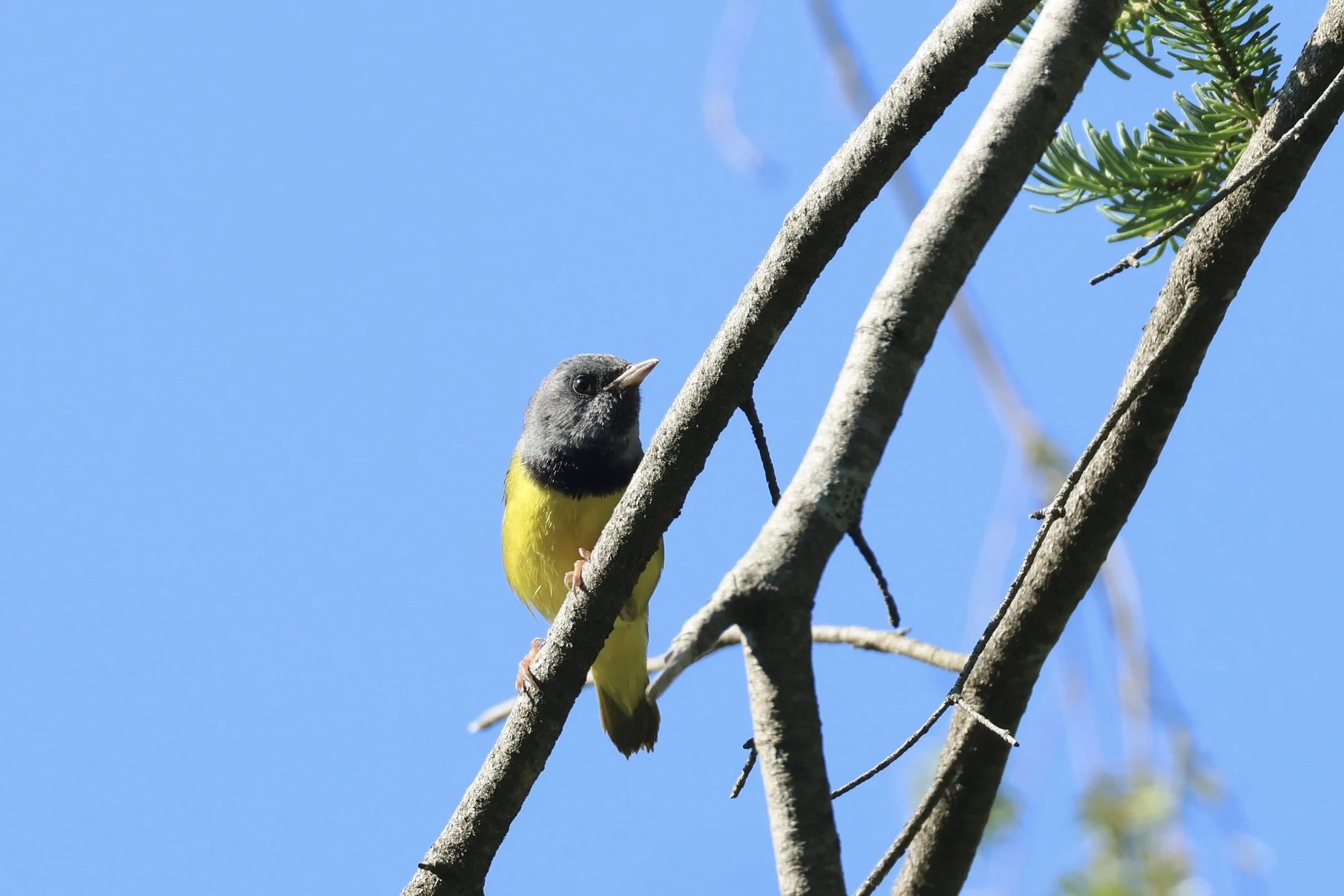
Imagine walking into a forest and seeing Wood Thrushes at every turn. Or, of finding dozens of Mourning Warblers on an outing. Every modest mudflat must have offered up countless numbers of shorebirds.
Audubon’s world was different than ours. It made me sad. What should I feel after driving for an hour and spending a morning looking for 1 of only 100 remaining Eastern Meadowlarks in Vermont? Elation when I see one? Or sadness -- knowing that there once were, and should be, thousands in the distance I traveled?
We encourage people to take-up birding and revel in all that nature offers. But in a way, it’s a fraud – birding today is no more a look at the true world of birds than the Eiffel tower in Las Vegas is to the real thing.
And, the trend is not good. In a couple hundred years, we’ve gone from hundreds in a tree to one in a park someplace. What does the loss of 3 billion birds in the past 50 years tell us about the future?
Sure, we’ve made progress. Scott Weidensahl’s latest book, “The Return of the Oystercatcher”, is a look at what is possible. Wonders have been accomplished for individual species – and even whole families of birds.
But what about the rest? What about the thousands of species under threat every day?
There are things we can do and are doing:
Buy up and protect the places birds need
Recruit landowners to the cause of conservation
Fight in court
Encourage legislation that supports conservation
Support efforts to limit light pollution and glass strikes
Make our yards and communities better places for birds
Embrace and encourage new birders to support conservation
Conduct science, science, and more science
Support organizations that do these things
In the end, my visit to Audubon’s world affirmed the joy of every bird sighting. But, beyond that, it codified something I have long believed.
For forty years, I have been as much involved in efforts to conserve and protect birds as to observe them. I’ve treated those activities as separate, probably because it’s not always fun being a conservationist dealing with the facts, whereas birding is always a joy, living in the moment.
The truth is they are inseparable. I’ve never been able to be a bird watcher without also being a bird conservationist. Together, they are how I define being a Birder.
How about you?
Here’s a challenge:
Drop us a note using the contact form on our website https://www.gmbirdalliance.org/contact
Let us know if you agree that bird watching without conservation is not birding. And if so, what do you do to help birds survive? We’ll publish the results!
P.S.
The day after I finished this note, a new video short from Ethan Tapper popped up on my computer. He’s been thinking along the same lines – Enjoy!
https://www.youtube.com/shorts/dr7otajQnaM
Photo by er-birds on iNaturalist, licensed under CC-BY